

2006 - The Discovery


The History behind the Archive!
The passage of time left its mark on the glass plates. Humidity from the water channel beneath the house seeped into the archive, causing images to fuse, surfaces to deteriorate, and new visual worlds to emerge. This was the beginning of Metamorphosis.
-
Spyros Haritou (1901–1991) was a Cypriot photographer born in Kissonerga, Paphos, in 1901. During his childhood, he spent time in Smyrna with his father before the family fled as refugees and settled in Athens. It was there that Haritou developed his interest in photography.
In the early 1920s, he returned to Paphos and opened a photography studio in Ktima in 1925. In 1929, he emigrated to the United States, where he continued to study and develop his photographic techniques.
Haritou returned to Paphos in 1931 and spent much of his career photographing the district’s people, landscapes, public events, religious ceremonies, celebrations, monuments, and everyday life. His archive remains an important visual record of twentieth-century Paphos.
-
In 2006, while researching the work of Spyros Haritou, I sought out his son, Michalakis Haritou, who was one of my father’s close friends and was living in Athens. My initial interest was to understand Haritou’s photographic legacy and consider how his work might be documented through future publications or thematic research.
During our discussion, Michalakis confirmed the existence of his father’s archive. He explained that it was stored in the basement of the family home in Paphos, but he had little further knowledge of its condition, as he had lived in Athens since 1977.
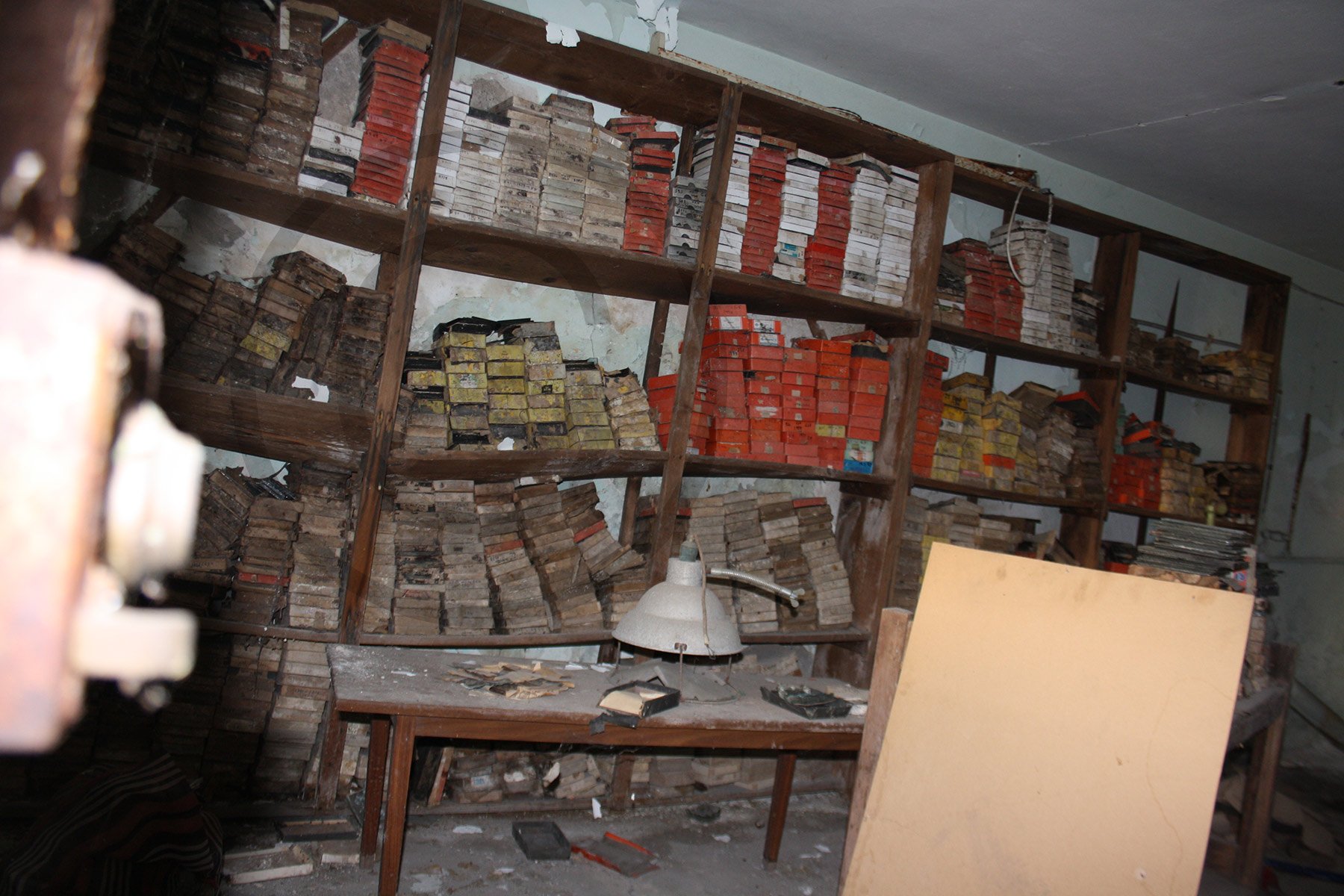
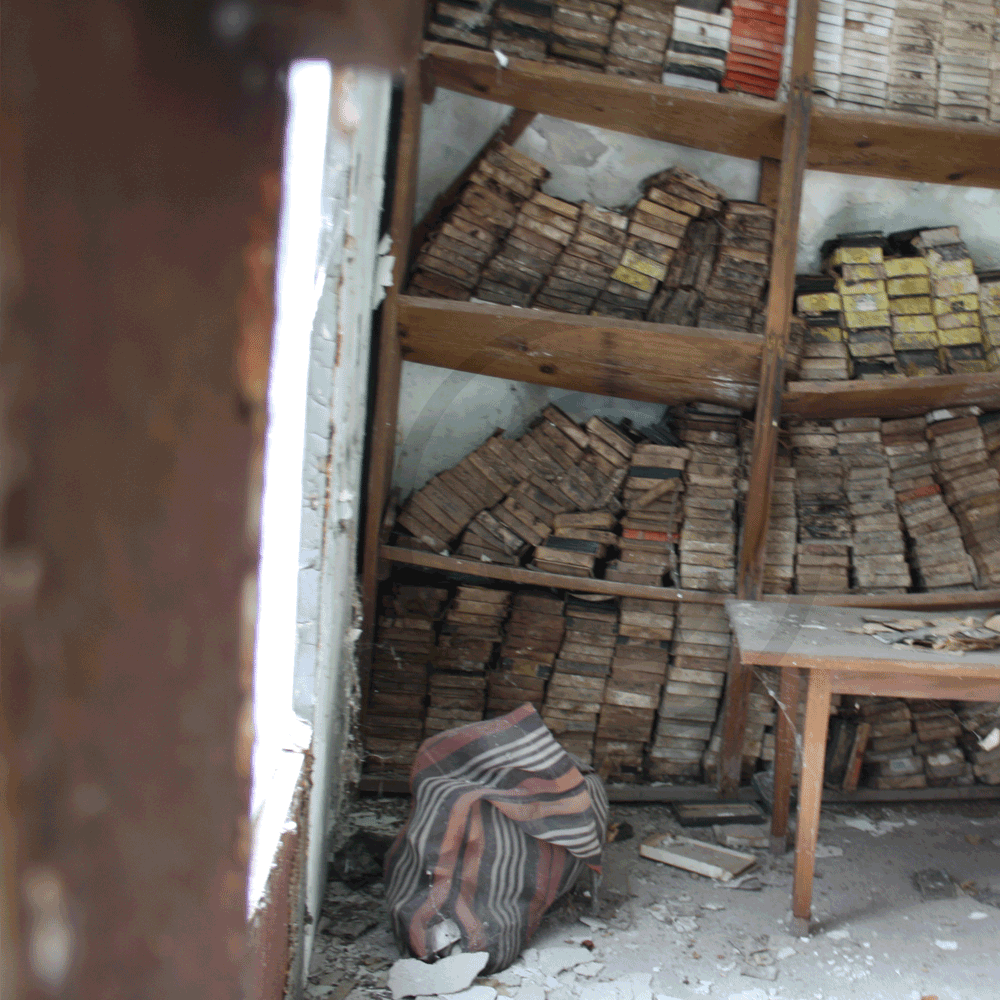
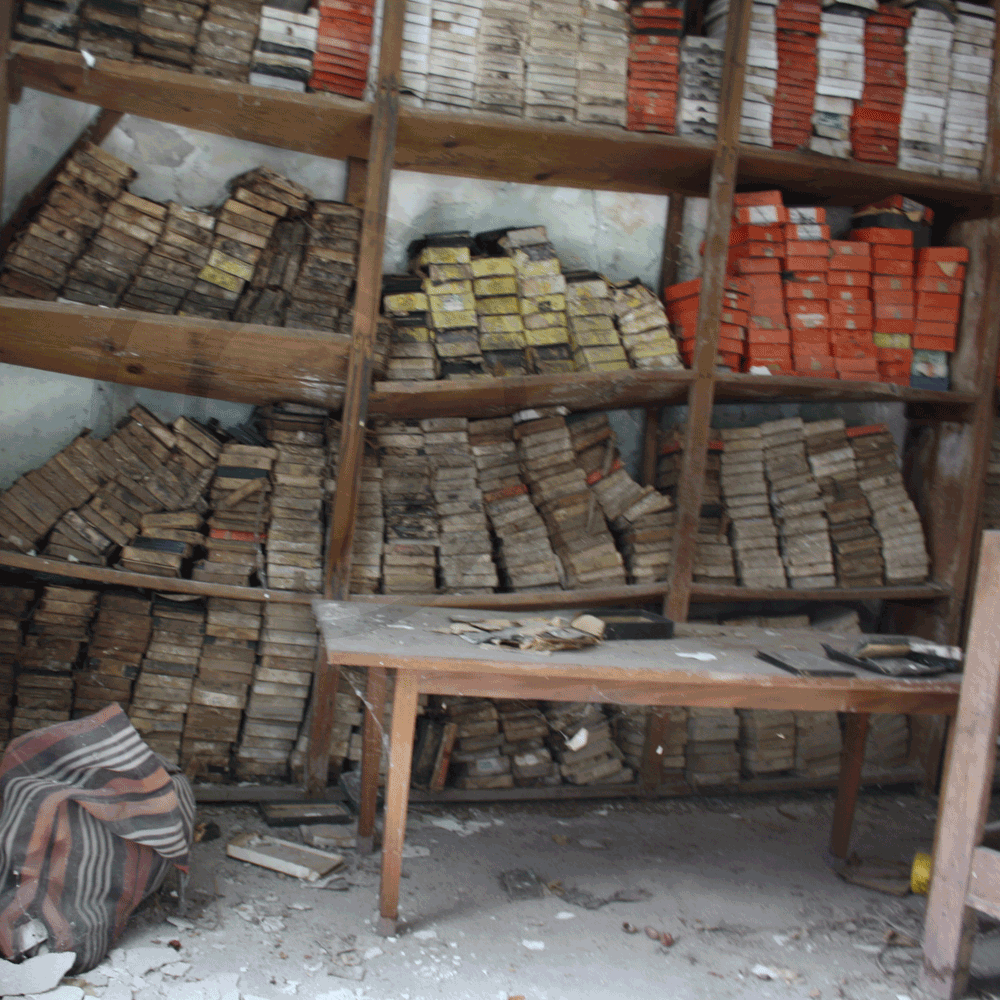
With his permission, I returned to Cyprus and visited the basement. What I found was not a conventional archive ready for study, but a fragile and deteriorated body of photographic material: thousands of glass negatives stored in boxes, many affected by humidity, dust, and long-term neglect. This discovery became the starting point for the work that would later develop into the Metamorphosis Art Project.
-
When I entered the basement, I found thousands of glass negatives stored in small boxes, many still organised by date but severely affected by the conditions of the space. Some plates had dried together into solid blocks; others were cracked, stained, corroded, or close to disintegration. It was immediately clear that this was not an archive ready to be studied in a conventional way. It was fragile, unstable, and in urgent need of careful handling, documentation, and long-term preservation.
I began consulting architects, civil engineers, photographers, artists, curators, and friends to understand how the material could be protected, studied, and eventually approached. None of us had encountered glass negatives in this condition and at this scale. The process required caution, patience, and experimentation.
For several years, the archive remained difficult to approach artistically because of its fragility. In 2016, while scanning a small group of fused plates, I began to understand that the damage itself could become part of the image. Humidity from the water channel beneath the house had caused plates to adhere to one another, allowing different photographic surfaces to merge into unexpected compositions.
This changed the direction of my practice. Instead of treating the damage only as loss, I began to see fusion, corrosion, stains, cracks, and disappearance as active visual material. The first results of this research were presented at the inaugural Larnaca Biennale in 2018, where the triptych Paphos Souls received a Prize of Excellence.
The archive later became the foundation of Metamorphosis, a long-term project that transforms deteriorated early twentieth-century glass negatives into contemporary digital and physical artworks. What began as an attempt to preserve a damaged archive became a sustained artistic practice based on transformation rather than restoration.
2006

Spyros Haritou (1901-1991) was born in Kissonerga, Paphos, in 1901. He spent part of his childhood in Smyrna with his father before the family fled as refugees and settled in Athens, where he developed his interest in photography. In the early 1920s, he returned to Paphos and opened a photography studio in Ktima in 1925. In 1929, he emigrated to the United States, where he continued to develop his photographic techniques.
He returned to Paphos in 1931 and photographed the district’s people, landscapes, monuments, public events, celebrations, and religious life for several decades. Haritou died in Paphos in 1991.
The archive as found in 2006, inside the basement of the Haritou family home in Paphos.







A thank-you note written on the basement wall, expressing my gratitude to Michalakis Haritou for entrusting me with the responsibility of his father’s deteriorated archive.